
You may think mosquito season ends after Labor Day.
It doesn’t.
In many areas, fall is one of the worst times for mosquito bites. Warm afternoons keep mosquitoes moving. Cool nights make outdoor time more comfortable for you, and still manageable for them. Late-season rain refills breeding sites. Fallen leaves create damp cover.
And by fall, mosquito populations have had all summer to build.
So if you’re still getting bitten in September or October, you’re not imagining it. Your yard may need protection now more than ever.
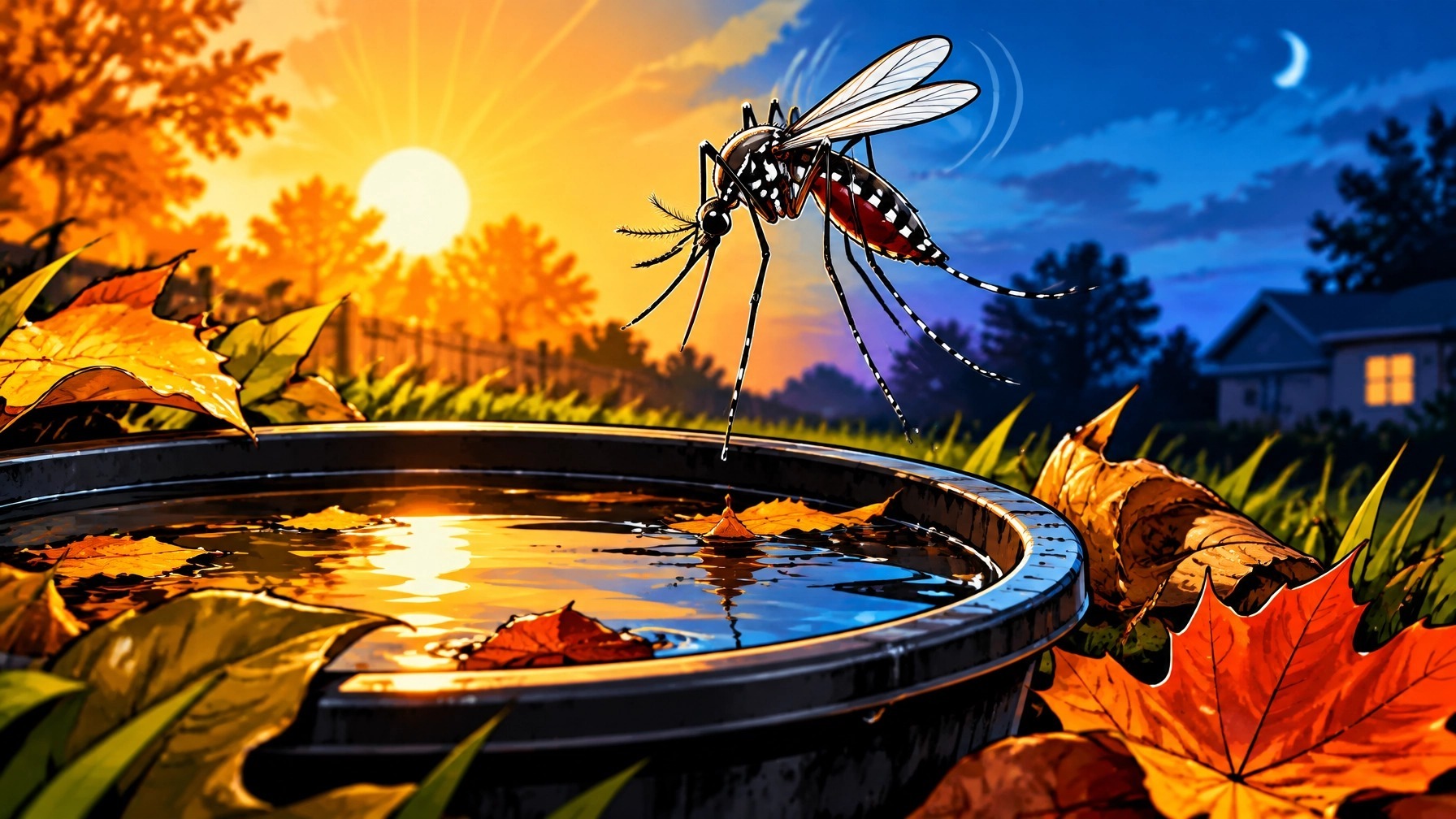
Mosquitoes don’t disappear because the calendar changes. They slow down when temperatures consistently drop, especially after a hard frost. But a few cool evenings are not enough. If daytime temperatures climb back into the 60s, 70s, or higher, mosquitoes can remain active, feed, and reproduce.
That warm-day, cool-night pattern is a problem for homeowners. You get pleasant afternoons and comfortable evenings. Mosquitoes get exactly what they need to keep flying.
Fall also comes after months of mosquito growth. Multiple generations may have hatched during the summer. That means more adults are looking for blood meals, more eggs are being laid, and more mosquitoes are ready to take advantage of every new puddle.
The fall mosquito cycle is simple:
As daylight shortens, some species begin preparing for winter. Depending on the species, they may produce dormant eggs or shelter as adults. But before that happens, warm fall spells can trigger one more aggressive breeding push.
That’s why “the last warm weekend” can suddenly feel like the worst weekend for bites.

Fall weather creates the perfect mosquito setup.
Late-season rain fills low spots, plant saucers, buckets, children’s toys, tarps, birdbaths, and other outdoor items. Then leaves fall into those water sources and keep them shaded, damp, and difficult to notice. A clogged gutter can become a mosquito nursery. So can a forgotten wheelbarrow.
Mosquitoes don’t need a pond. Many species can develop in surprisingly small amounts of stagnant water. The Asian tiger mosquito, in particular, is comfortable around homes and businesses. It often uses artificial containers, gutters, tires, and other items that collect rain.
Leaves make the problem worse in two ways:
Some mosquitoes shelter in dense shrubs, tall grass, and shaded vegetation during the day. If your yard has overgrown areas next to patios, play spaces, or entryways, mosquitoes have a convenient place to rest before they come looking for you.
The answer isn’t complicated. It’s consistent maintenance.
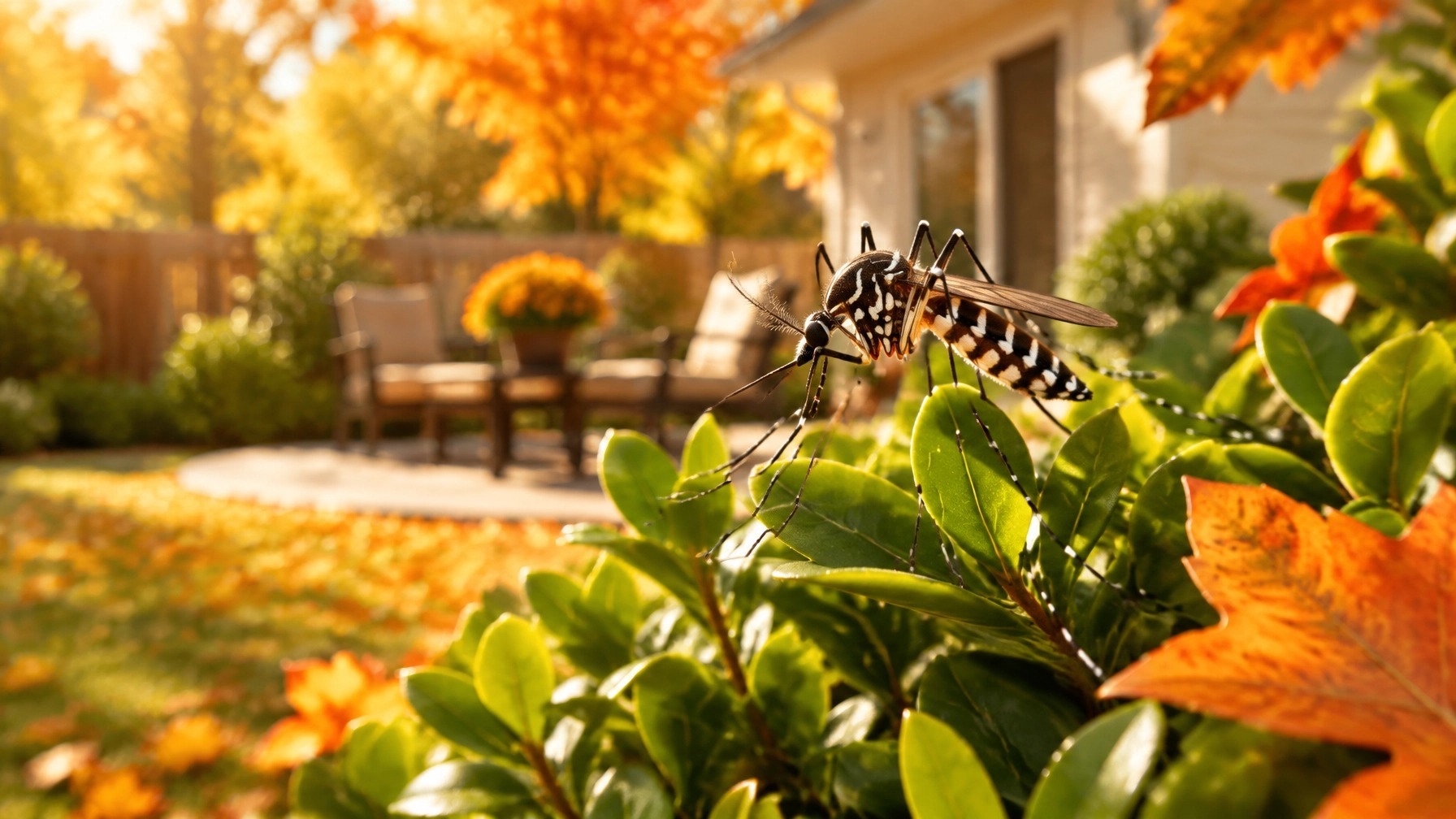
The Asian tiger mosquito is one reason fall mosquito problems can feel especially persistent.
This small mosquito has black-and-white markings and often bites during the day, especially in shady areas. It is highly adaptable. It can live close to people and use small pockets of water around homes, patios, businesses, and community spaces.
Unlike some mosquitoes that are most active around dawn and dusk, Asian tiger mosquitoes may be active during warm daylight hours. That means you can get bitten while:
They can remain active into October and beyond when fall weather stays mild. A cold snap may slow them down, but a warm rebound can bring them right back. One chilly night does not end mosquito season. Consistently cold conditions do.
Fall bites are also not harmless just because summer is over. Mosquitoes can carry diseases, including West Nile virus. According to Penn State Extension, West Nile cases can remain high in September and October before typically declining later in the fall. You should continue using basic protection and pay attention to public-health alerts in your area. If you develop symptoms after a mosquito bite, contact a healthcare professional.

You can make your property less inviting to mosquitoes with a few practical steps.
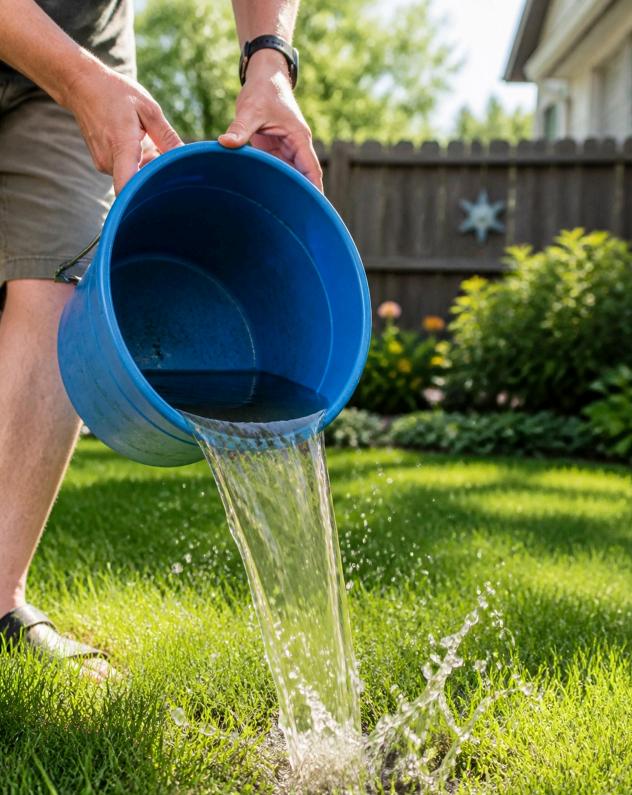
Don’t wait for your normal yard-work day. Walk the property after storms and empty:
Turn containers upside down when possible.
Remove leaf piles from around patios, sheds, fences, and outdoor gathering spaces. Keep organic debris from collecting in places where water can sit.
Keep gutters flowing. Clear leaves and sediment before they create shallow pools. Make sure downspouts direct water away from the foundation and outdoor living areas.
Keep grass and vegetation managed, especially around play areas, walkways, decks, and patios. Trimming doesn’t eliminate mosquitoes, but it reduces shaded resting areas and improves airflow.
This is when homeowners often get caught off guard. A cold evening may make you think mosquitoes are gone. Then a warm weekend arrives, and activity returns.
If you see mosquitoes, treat the season as active.
Mosquitoes are weak fliers. A fan can make a patio less comfortable for them. Use screens around porches and check window and door screens for holes or gaps.
For personal protection, wear long sleeves when practical and use an EPA-registered repellent according to its label.

You shouldn’t have to cancel every fall gathering because mosquitoes are still active. You also shouldn’t have to sign a complicated contract just to protect your outdoor space.
Mosquito Tiger provides personalized residential mosquito control designed to help you regain control of your yard. We also provide commercial services for restaurants with outdoor dining, daycare centers, apartment complexes, parks, and more.
Here is what makes our approach simple:
If you’re searching for pest control, don’t wait until the first frost. If mosquitoes are biting, it’s still mosquito season.
Ready for reliable outdoor mosquito treatment? Contact Mosquito Tiger for a quote. We’ll help you choose a practical plan for your property, with no hidden terms and no long-term commitment.